

we are Jelly Key
We are Steven Tran and Augustino Nguyen, and we have been shaping artisan keycaps by hand in Vietnam since 2015. In that time more than a hundred series have left our studio, each one sculpted, cast, and painted by people who have spent years learning what resin will and will not do. We did not arrive here quickly. Every technique we trust today was earned through hundreds of pours that failed before they worked. We have never been a marketing company, and we never wanted to be. We would rather spend our hours at the bench and with the people who collect our work than chase attention, because the keycap and the person who receives it are the only things that have ever truly mattered to us.
made by hand
An artisan keycap begins as a sketch and ends as a small sculpture you can type on. We sculpt a master by hand, cast a silicone mould, then pour resin in thin layers, setting pigment, wood, watch gears, gold leaf, or glow pigment exactly where the design needs them. Once cured, each cap is demoulded, trimmed, sanded, polished, and painted by hand. Nothing is printed, and nothing is rushed.
a small canvas
We treat each keycap as a miniature canvas. A single cap, usually the Escape or Enter, becomes the one object your eye returns to on a keyboard you look at all day. Our themes come from the world around us: coral reefs, forests, quiet landscapes, and small stories. The goal is never decoration for its own sake, but to put a piece of art within reach of your fingertips and make a tool feel personal.
built to last
Years of practice have taught us where keycaps fail, so we build against it. We use materials that are safe to handle and made to endure, and finish every cap to the same standard whether it is a one-off or part of a large run. Each piece carries a unique serial number on a dog tag, so its story stays with it. We still spend much of our time testing new resins and pigments, because a craft that stops learning stops being a craft.
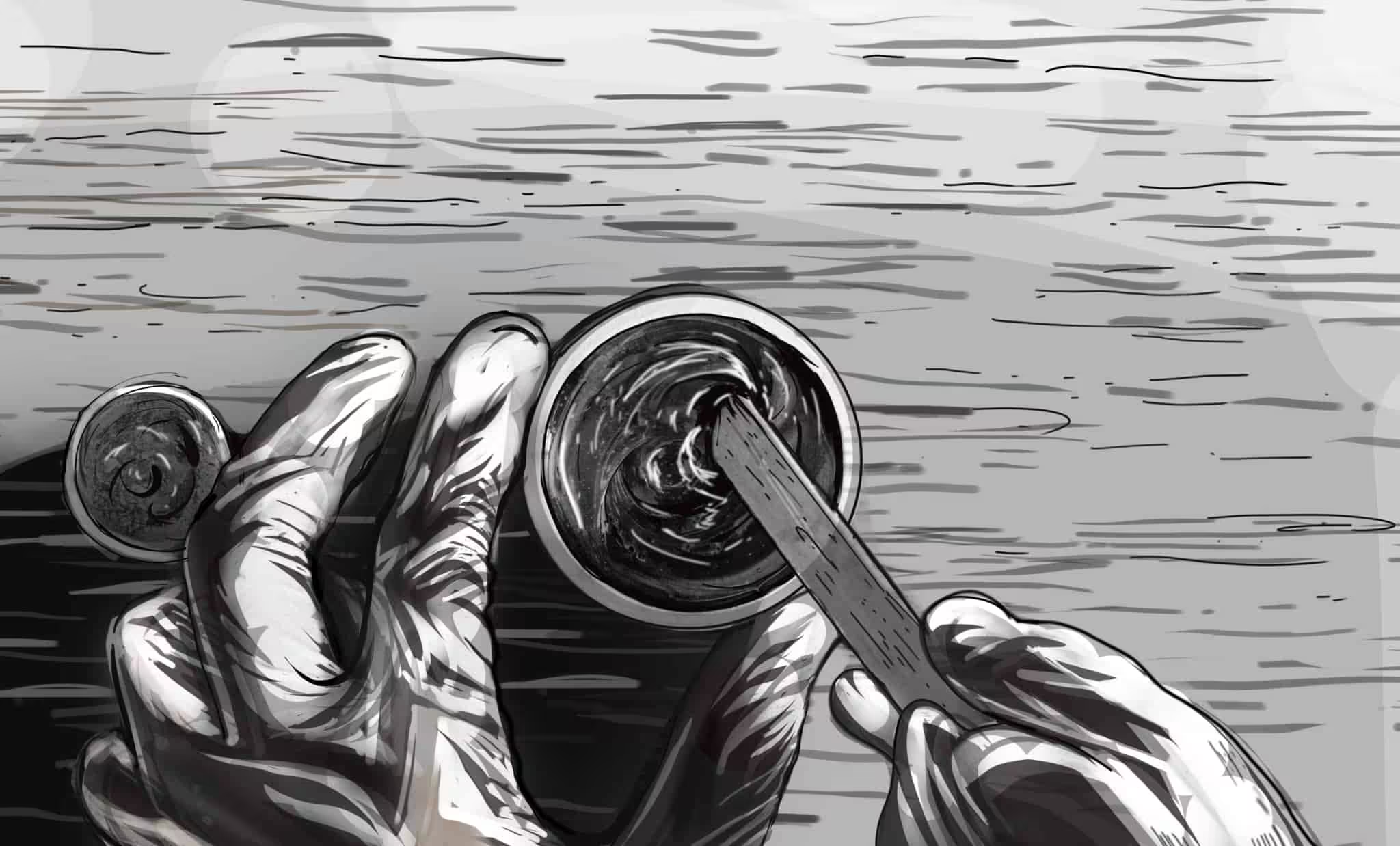
We make these by hand on purpose. In a day spent moving between screens, a handmade object is a small reminder that some things are still shaped slowly, by people, one at a time. It is also why no two of our keycaps are ever identical; the faint differences are not flaws, but the mark of a human hand. Over the years, many of the ideas we poured months into have been copied and sold by others, sometimes before our own run had even reached the people who waited for it. It stung at first. But we decided long ago that the answer was not to fight louder or guard our work behind locks, only to keep our heads down and make pieces that are far harder to imitate than they look. A design can be copied in an afternoon. The years of failed casts and steady hands behind it cannot.